
Vavada kasyno gry i atrakcyjne bonusy dla graczy
August 25, 2023Казино Вавада рабочее зеркало играйте без ограничений
October 14, 2023
Fixed overheads are expected to increase/decrease per unit in line with the seasonal variations. So, the cost of a product in one period may not reflect the cost in another period—for instance, the cost of freezing fish increases in the summer and lowers in the winter. However, there is a strong need to constantly update the production level depending on the seasonal fluctuations and the factor affecting the demand of the product. Company X and Company Y are competing to acquire a massive order as that will make them much recognized in the market, and also, the project is lucrative for both of them. After going to its terms and conditions of the bidding, it stated the bid would be based on the overhead rate percentage. Therefore, the one with the lower shall be awarded the auction winner since this project would involve more overheads.
- This is why a predetermined overhead rate is computed to allocate the overhead costs to the production output in order to determine a cost for a product.
- It’s called predetermined because both of the figures used in the process are budgeted.
- Manufacturing operating expenses typically are comprised of machines, direct materials cost, direct labor hours and actual machine hours needed to manufacture a product.
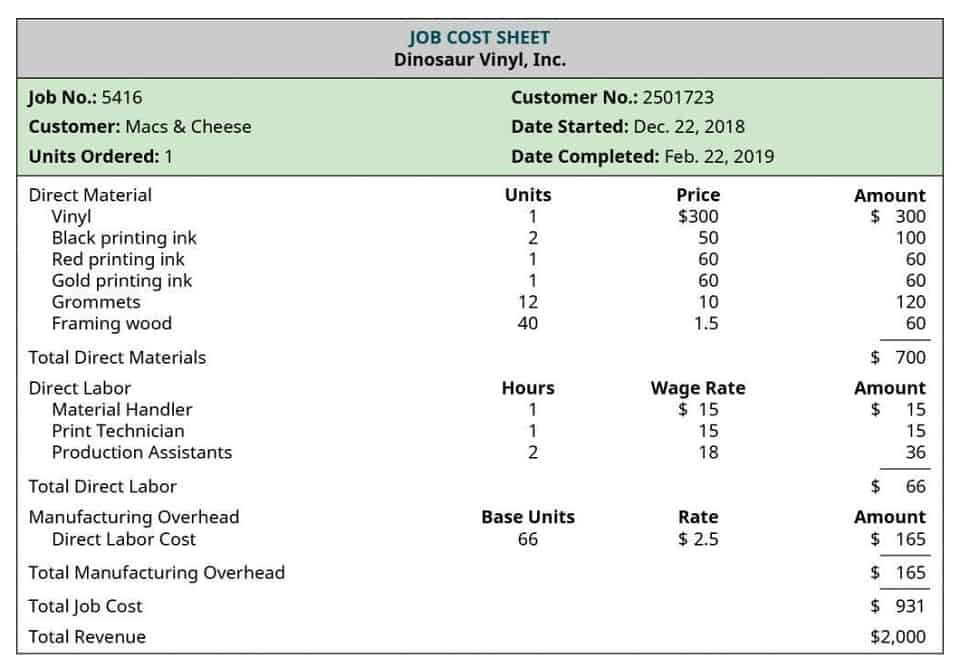
- For example, if the rate is $5 per direct labor hour and a job uses 100 direct labor hours, then $500 of overhead ($5 x 100) is applied to that job.
- When companies use standard cost accounting, they substitute an estimated cost for an actual cost.
Calculating Overhead Cost Per Unit
Using a predetermined overhead rate allows companies to apply manufacturing overhead costs to units produced based on an estimated rate, rather than actual overhead costs. This rate is then used throughout the period and adjusted at year-end if necessary based on actual overhead costs incurred. You can calculate this rate by dividing the estimated manufacturing overhead costs for the period by the estimated number of units within the allocation base.

Q3: How do you choose the best allocation base?
If we prepare the cost sheet for a year or a longer period, it is appropriate to predetermined overhead rate formula include the fixed cost in overhead allocation. However, if we have to submit a quote for a one-time order which is not recurring and the organizations have already recovered the Fixed cost from the current contribution. Since both the numerator and denominator of the calculation are comprised of estimates, it is possible that the result will not bear much resemblance to the actual overhead rate. It is used in cost accounting to estimate manufacturing overhead costs for a specific period. This is related to an activity rate which is a similar calculation used in activity-based costing. Any difference between applied overhead and the amount of overhead actually incurred is called over- or under-applied overhead.
- Discover essential eBay selling tools, including seller, marketing, and listing tools to enhance your ecommerce business efficiency and increase sales.
- For example, the costs of heating and cooling a factory in Illinois will be highest in the winter and summer months and lowest in the spring and fall.
- In summary, overhead rates have a sizable impact on a company’s key financial statements and decisions.
- One of the primary challenges is the potential for distortion if the estimated overhead costs or allocation base is inaccurate.
- Finally, the business must estimate the total quantity of the chosen activity base for the upcoming period.
Analyzing Departmental Overhead Rates
However, the business may face problems when trying to determine the overhead cost per unit. To calculate the Predetermined Overhead Rate, first estimate the overhead costs for the year, then estimate the activity base (such as machine hours or labor hours). While the predetermined overhead rate formula is a valuable tool, it is not without its limitations and considerations.
B. Select Allocation Base
- Divide the total manufacturing overhead cost by the estimated total units of activity to determine the predetermined overhead rate.
- For example, if a company incurs cooling expenses, then the expenses are likely to be higher in summer than in winter.
- You can calculate this rate by dividing the estimated manufacturing overhead costs for the period by the estimated number of units within the allocation base.
- Most companies will adopt the use of predetermined overhead rates in order to know how their products are performing even before the accounting period ends.
- The tool is especially useful in manufacturing and production settings, where accurate cost allocation is critical for job costing and financial planning.
Suppose QuickBooks a business is focused on auto repair, then the accountant has to use direct labor hours in their calculation to determine how many hours it took for a mechanic to do their job. Once the total overheads are estimated, the organization needs to identify the base unit used for allocating overheads. The base unit can be the number of units produced; labor hours worked, machine hours utilized, or any other base depending on the type of business. Also, it’s important to compare the overhead rate to companies within the same industry.
Molding Department
- Predetermined overhead rates are applied in various financial and operational areas.
- It is often difficult to assess precisely the amount of overhead costs that should be attributed to each production process.
- In the realm of managerial accounting and cost analysis, the concept of predetermined overhead rates plays a pivotal role.
- There are many reasons why businesses need to calculate predetermined overhead rates, although, they may have some limitations.
This is why a predetermined overhead rate is computed to allocate the overhead costs to the production output in order to determine a cost for a product. The predetermined overhead rate is, therefore, usually used for contract bidding, product pricing, and allocation of resources within a company, based on each department’s utilization of resources. The predetermined overhead rate is an estimated rate calculated before an accounting period begins. This estimation is important because actual overhead costs are often not known until the end of a period, making timely How to Invoice as a Freelancer cost determination difficult. By using a predetermined rate, businesses can apply overhead costs to products or jobs throughout the period as production occurs.